


Dubai’s plot market recorded AED 16.60 billion in transactions over six months. However, the distribution of this capital reveals a more interesting story.
Between 12 April and 12 October 2026, Dubai recorded 851 plot transactions covering approximately 40.88 million sq ft of land. The average transaction value reached AED 19.50 million. However, the median stood at AED 5.20 million.
These figures reveal an important difference between transaction volume and capital value. They also show why location, plot size, intended land use and deal size matter when analysing the Dubai land market.
Based on Property Monitor and Dubai Land Department (DLD) data, this article examines where the highest land transaction values were recorded, which locations attracted the most activity, and what these trends could mean for property developers and investors.
Dubai Plot Market Overview: The Key Figures
Dubai’s land market recorded substantial activity during the six-month period.
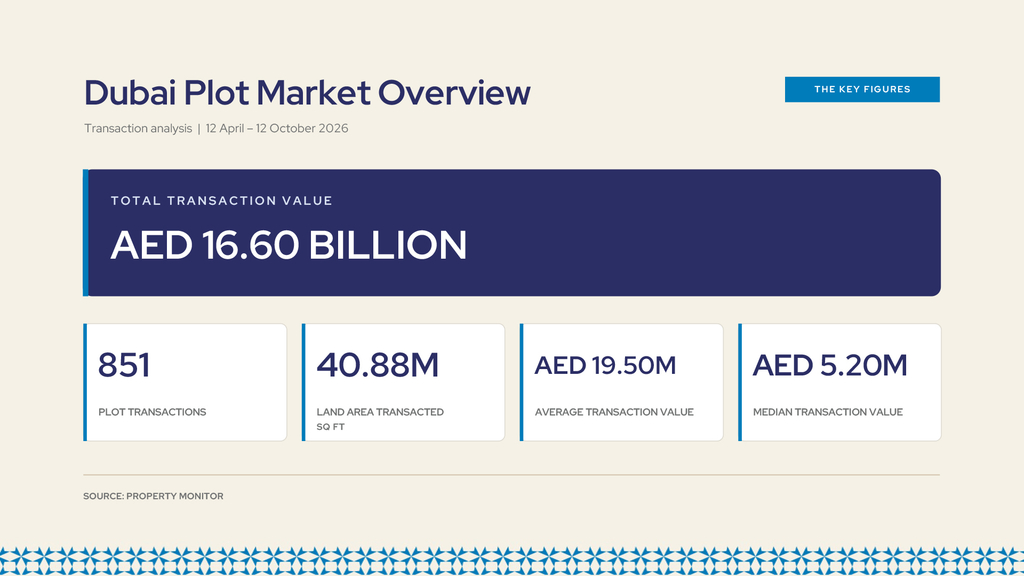
Together, these figures provide a useful overview of Dubai’s plot market. However, the overall totals only tell part of the story. To understand where capital is moving, we need to look at individual locations, transaction sizes and land categories.
Which Dubai Locations Recorded the Highest Land Transaction Values?
City of Arabia recorded the highest total land transaction value, reaching AED 1.86 billion across 24 transactions.
Dubai Industrial City followed closely, with AED 1.82 billion from 67 transactions. Meanwhile, Dubai South recorded AED 1.60 billion across 63 transactions.
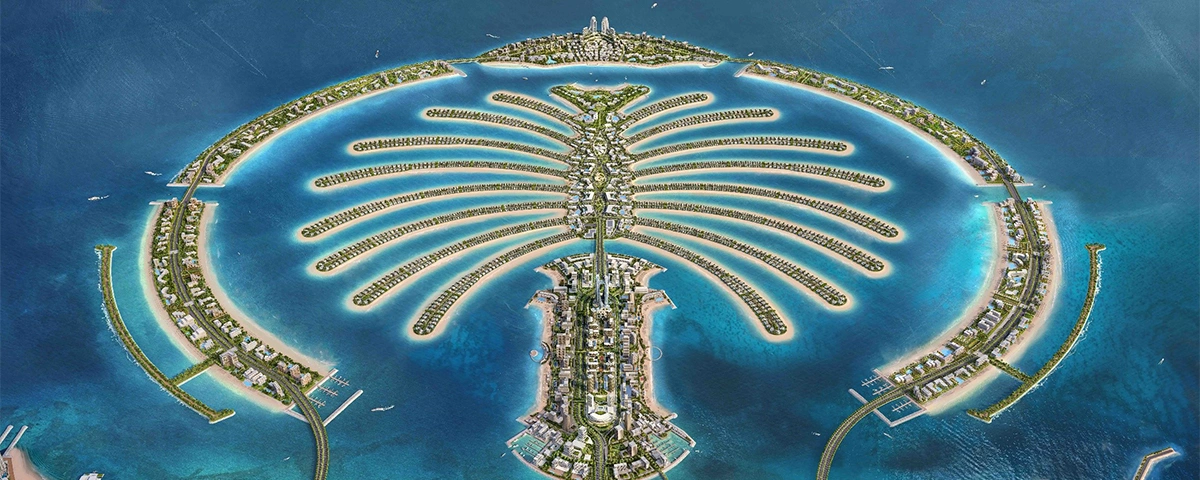
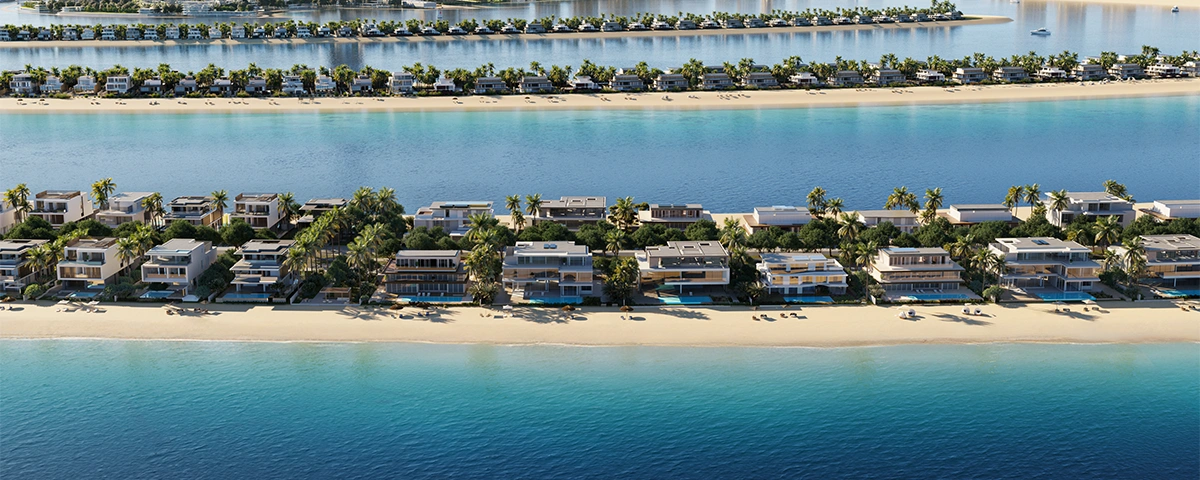
Palm Jebel Ali also featured prominently. Despite recording only 10 plot transactions, the location generated AED 1.49 billion in total transaction value.
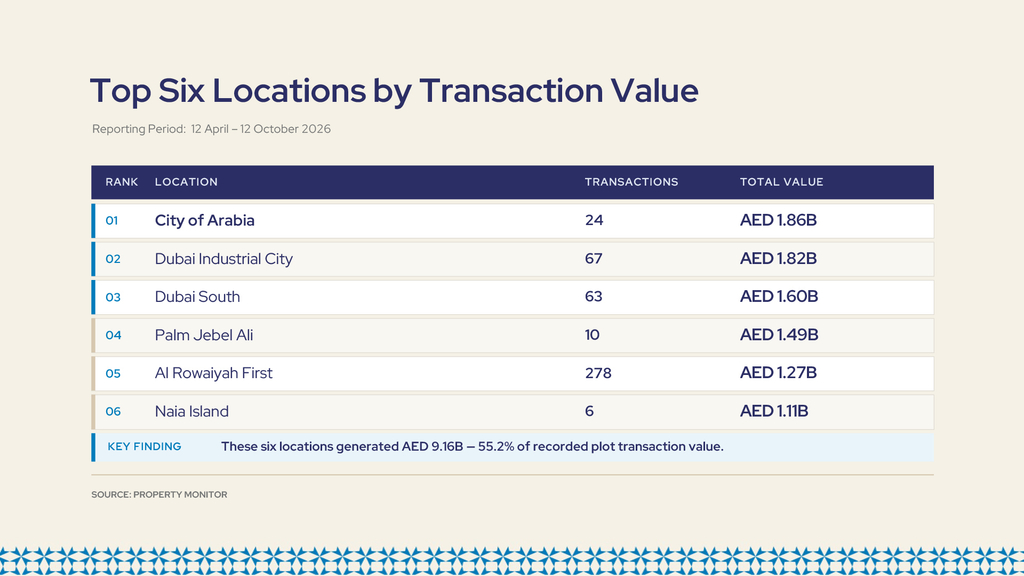
These figures show that high-value land activity is spread across different parts of Dubai.
For example, Dubai Industrial City and Dubai South recorded strong total values alongside relatively high transaction volumes. In contrast, Palm Jebel Ali and Naia Island generated substantial values through far fewer transactions.
Therefore, transaction count alone cannot explain the importance of a location in Dubai’s land market.
Palm Jebel Ali vs. Al Rowaiyah First: A Difference in Transaction Scale
One of the clearest comparisons comes from Palm Jebel Ali and Al Rowaiyah First.
Palm Jebel Ali recorded 10 transactions worth AED 1.49 billion. This represents an average transaction value of approximately AED 149.20 million.
Al Rowaiyah First, on the other hand, recorded 278 transactions worth AED 1.27 billion. Its average transaction value was approximately AED 4.57 million.
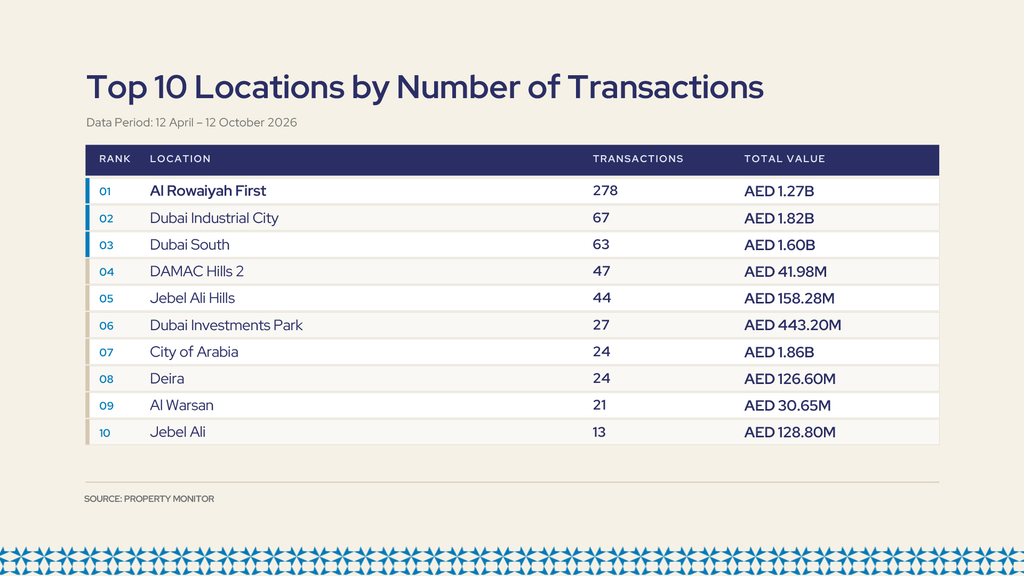
Although Palm Jebel Ali recorded far fewer transactions, its total value exceeded that of Al Rowaiyah First. In fact, the average transaction value in Palm Jebel Ali was approximately 32.6 times higher.
This comparison highlights the role of deal size in land market analysis. A small number of high-value transactions can generate substantial capital activity. Meanwhile, a location with many smaller transactions can record a lower overall value.
For developers, this distinction matters when comparing land opportunities across different locations and project scales.
Where Were Dubai’s Highest Land Prices per Square Foot Recorded?
Total transaction value is only one way to assess the land market. Price per square foot provides another perspective.
Based on the supplied figures, Naia Island recorded the highest average land price at AED 6,366 per sq ft. Palm Jumeirah followed at AED 4,341 per sq ft.
Other locations in the top seven included Meydan Horizon, Dubai Hills Estate, Bur Dubai, and Sobha Hartland.
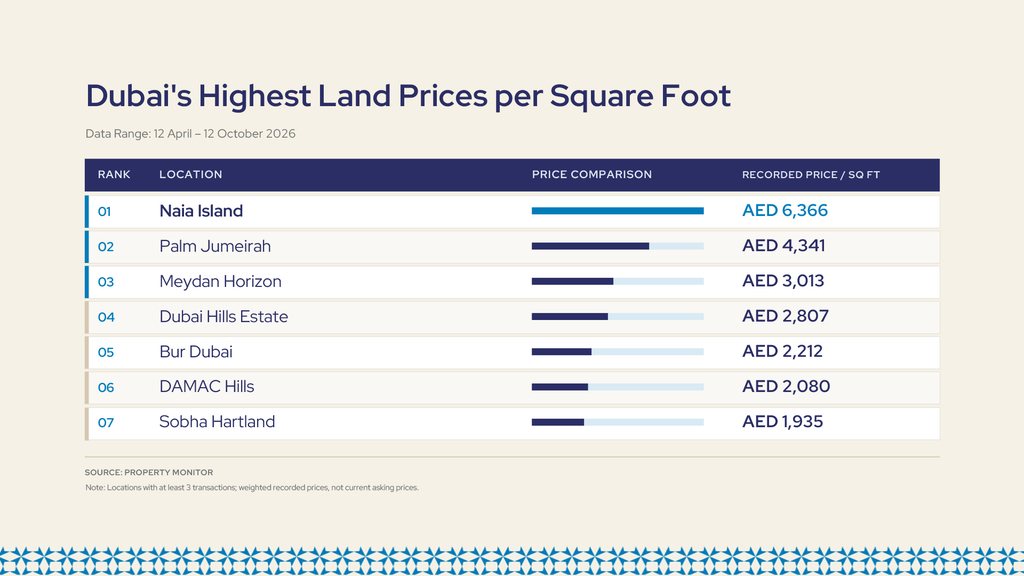
These figures highlight the differences in land pricing across Dubai.
However, price per square foot should not be viewed in isolation. Plot size, location, permitted development, frontage, views and intended use can all influence a transaction price.
Consequently, a higher recorded price does not automatically mean a better investment. Developers should compare plots with similar characteristics before making a decision.
Which Plot Sizes Accounted for the Most Capital?
Plots measuring 5,000–20,000 sq ft recorded the highest transaction volume, with 462 deals worth AED 3.14 billion.
However, larger plots generated more capital. Sites above 20,000 sq ft accounted for approximately 79.5% of total transaction value.
This shows why plot size matters when analysing Dubai’s land market. Transaction volume alone does not reflect the full value of market activity.
Mixed-Use and Hospitality Land Led Transaction Value
Mixed-use and hospitality land generated AED 6.69 billion across 161 transactions, representing 40.3% of total transaction value.
Residential land recorded the highest transaction volume, with 562 deals worth AED 6.22 billion. Meanwhile, industrial and logistics land generated AED 2.78 billion.
These figures highlight a clear difference: residential land led by volume, while mixed-use and hospitality land led by value.
High-Value Land Deals Had a Significant Influence on the Market
Transactions worth AED 50 million or more accounted for just 8.8% of all deals but generated 61.2% of total transaction value.
Meanwhile, transactions below AED 10 million dominated volume, with 609 deals worth AED 2.42 billion.
The average transaction value was AED 19.50 million, compared with a median of AED 5.20 million. This gap shows how a small number of large deals can influence market averages.
What Do These Dubai Land Market Trends Mean for Investors?
The six-month data highlights several factors to consider when evaluating land opportunities in Dubai.
1. Location matters alongside transaction value. A high total value may reflect a few large deals rather than consistently high activity across an area.
2. Plot size influences capital requirements. Larger sites accounted for approximately 79.5% of total transaction value. However, their suitability depends on development potential, permitted use and project feasibility.
3. Price per square foot needs context. Comparing similar plots helps assess pricing more accurately. Acquisition costs, development expenses and expected revenue should also be considered.
4. Transaction volume tells only part of the story. Areas with frequent smaller deals may offer a different range of opportunities from locations dominated by high-value development sites.
Ultimately, land selection should align with the intended project, available budget, development objectives and investment horizon.
Reading Beyond Dubai’s Land Transaction Figures
Dubai recorded AED 16.60 billion in plot transactions between 12 April and 12 October 2026. Yet the most important insight is not simply the total value.
City of Arabia led the market by total transaction value. Al Rowaiyah First recorded the highest transaction volume among the listed locations. Palm Jebel Ali generated a higher total value than Al Rowaiyah First despite recording far fewer deals. Meanwhile, larger plots and transactions valued at AED 50 million or more accounted for substantial shares of total capital activity.
Together, these trends show why Dubai land market analysis requires more than a ranking of locations.
Transaction volume, total value, plot size, price per square foot and intended land use all contribute to a clearer picture. For developers and investors, understanding these differences can support more informed comparisons and better-grounded land acquisition decisions.
Source: Property Monitor. Reporting period: 12 April–12 October 2026.